Jolt enters daily life quietly, not with warnings or guilt but with a gentle presence that feels almost human. Users often feel tired of fighting their phones and tired of failing. What they want is not another rule but a sense of balance that actually lasts. As a screen time management app Jolt focuses less on punishment and more on awareness. Many people prefer that softer approach because it does not create shame. It creates space instead and space is rare now.
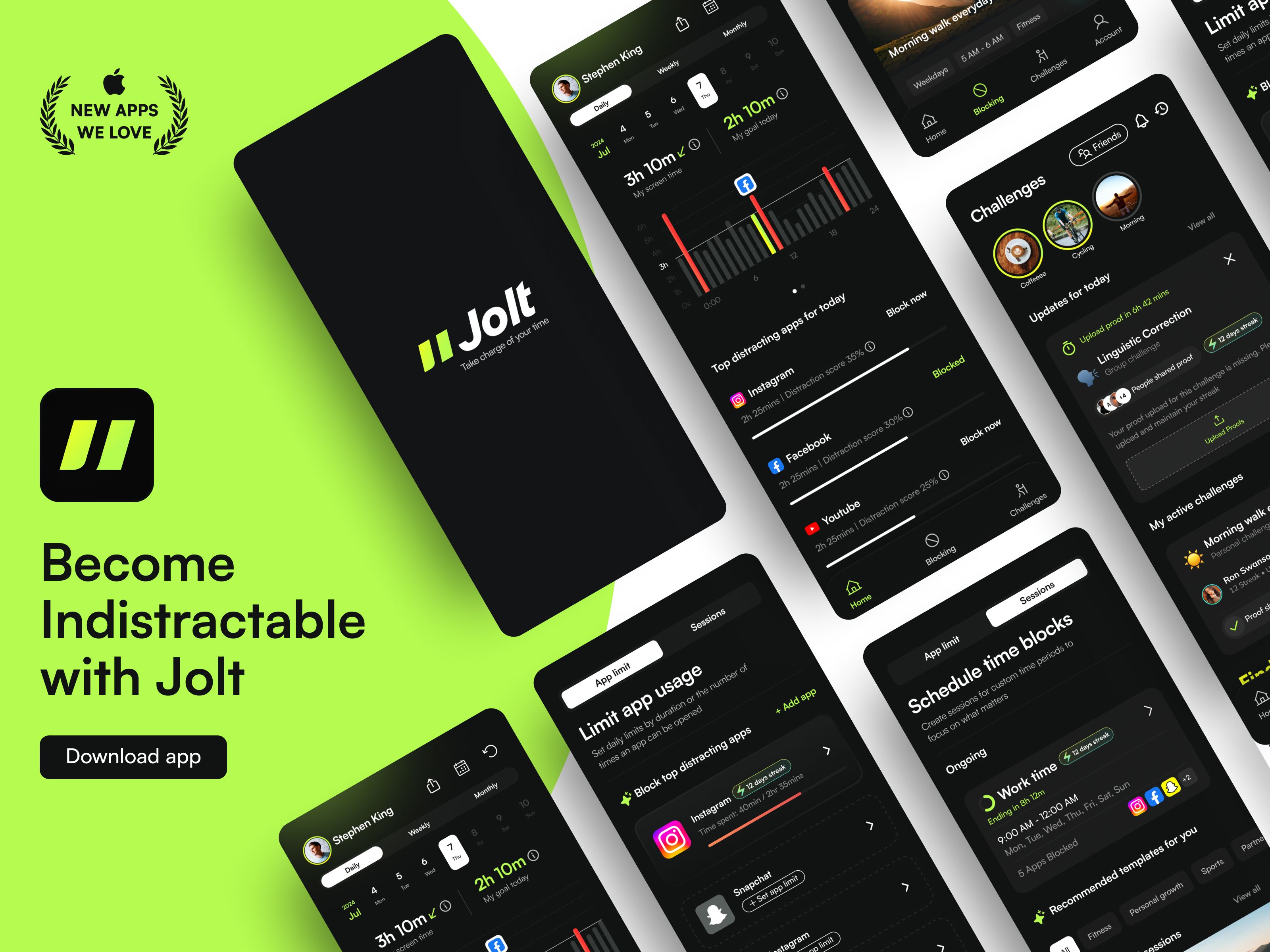
The screen time category is crowded and competitive with big names promising instant discipline. Yet users often feel those promises fade quickly. Real change is slower and far more personal. Jolt understands that the real battle is not the phone but smart phone addiction that hides inside routine. Checking becomes a reflex before it becomes a choice. Jolt shines a calm light on that pattern without forcing drama or extremes.
Social platforms pull hardest at attention which is why the need for social media block tools keeps growing. People do not hate these platforms. They just hate how easily time disappears inside them. Jolt allows users to step back without cutting off connection completely. It behaves like a social media time limit app that adapts to the rhythm of real days. Workdays feel different from weekends and energy is never the same two days in a row. Many people prefer that kind of flexibility over strict digital walls.
At its core Jolt supports time limit on apps in a way that feels reasonable rather than rigid. You can pause what drains you most and still keep what matters. Users often feel surprised by how much mental quiet returns once their usage becomes intentional. Short breaks start stretching longer. Moments that were once swallowed by scrolling begin to feel usable again. That shift is small but it stays and that is why people keep Jolt installed.
The wider market shows that digital wellbeing is no longer a niche idea. It has become a shared need across students, professionals and parents alike. Users often feel relief when they realise they are not alone in their struggle for balance. Jolt does not act like a saviour. It behaves like a quiet partner in the background of daily life.
Where Jolt quietly stands out is in how it fits into emotion rather than routine alone. Many people prefer control that does not feel like control. They want help without pressure and guidance without judgment. That balance is difficult to design and easy to ruin. Jolt handles it with restraint and that feels rare.